Building a platform to help companies prevent employee burnout.
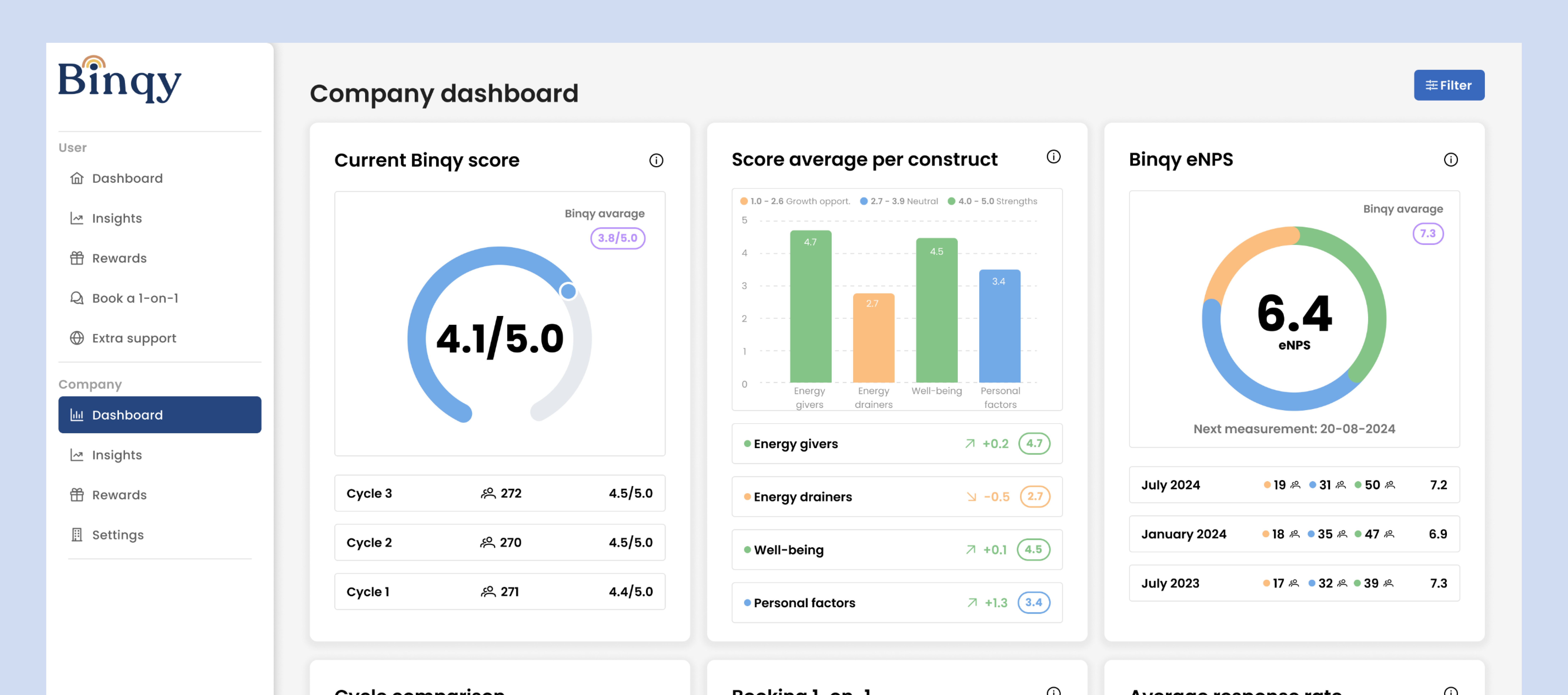
I helped Binqy prevent employee burnout by designing a simple and engaging platform. I mapped out key flows, simplified check-in interactions, and turned well-being data into clear, actionable insights through thoughtful UX and UI design.

Thomas Nieuwenhuis
Co-founder & CTO of Binqy
“Working with Han has been one of the best experiences while working at Binqy. Han brings a structured, collaborative approach to design, with clear processes and continuous feedback loops. Even when our feature requirements are complex or not fully defined, Han consistently manages to translate our ideas into intuitive, high-quality designs that exceeded our expectations. Most notably, Han's strong focus on user accessibility has significantly contributed to making our product more inclusive and user-friendly for a wide range of clients.”

Jelle Houben
Co-founder & CEO of Binqy
“Working with Han has been a true pleasure. As our dedicated UX/UI Designer, Han has played a key role in shaping our software. From seamless interfaces to intuitive dashboards, everything our users experience has been carefully designed, tested, and improved with Han’s skill and dedication. Our high customer satisfaction is a direct result of Han’s ability to turn complex ideas into simple, user-friendly solutions. Han is a highly valued member of our team and a true professional.”
Challenge
Burnout is a growing challenge in modern workplaces, and many companies struggle to recognize the early signs within their teams. Binqy set out to change that by creating a proactive, accessible, and engaging tool that supports employee well-being. The challenge was twofold: to redesign the platform in a way that turns sensitive user feedback into clear, actionable insights, and to do so with a human-centered approach that resonates with both co-workers and managers. As the Lead UX/UI Designer and Chief Design Officer, I led the complete redesign, grounded in research and shaped by real user input, to enhance usability, clarity, and engagement across the entire platform.
Approach
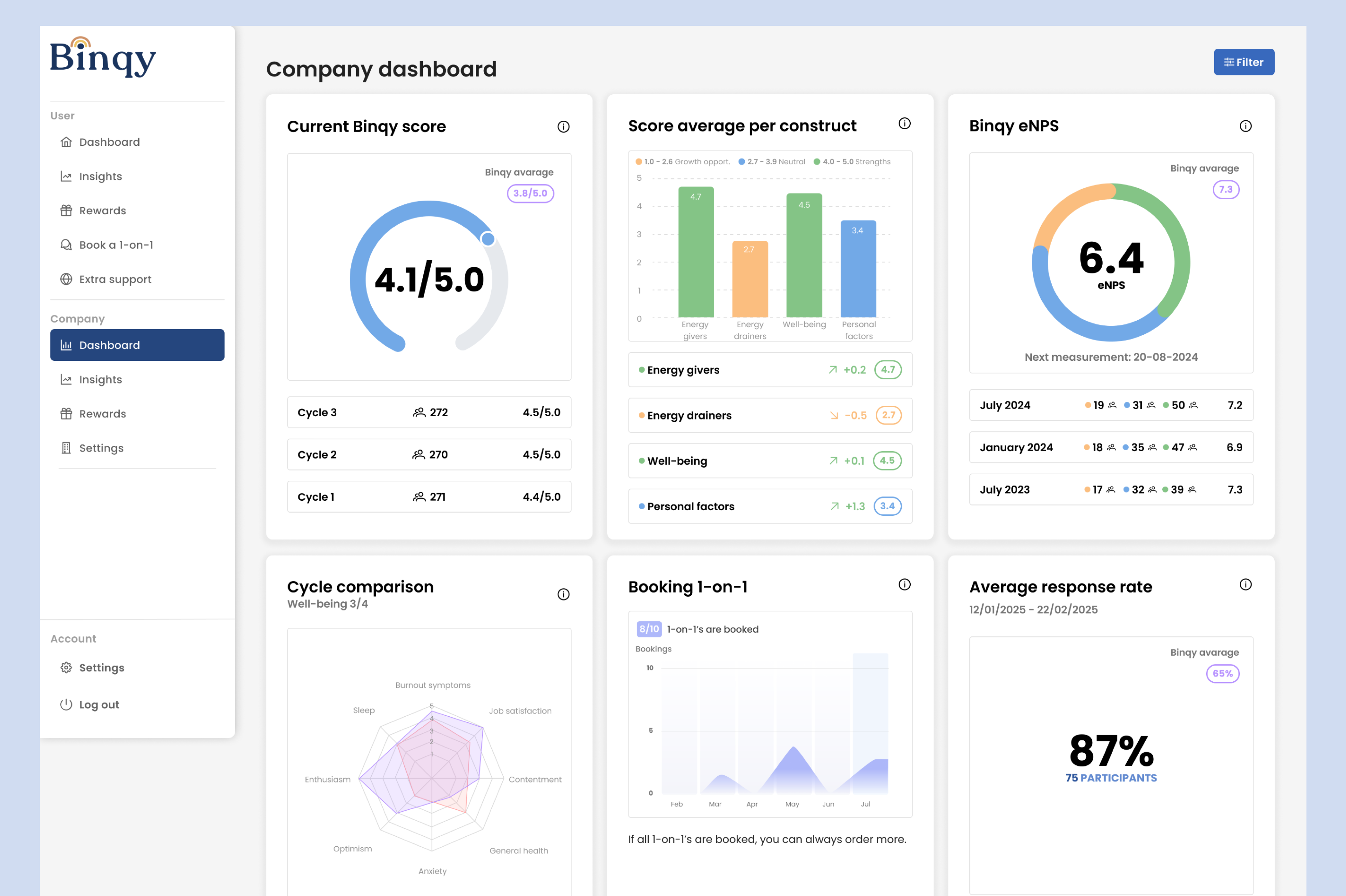
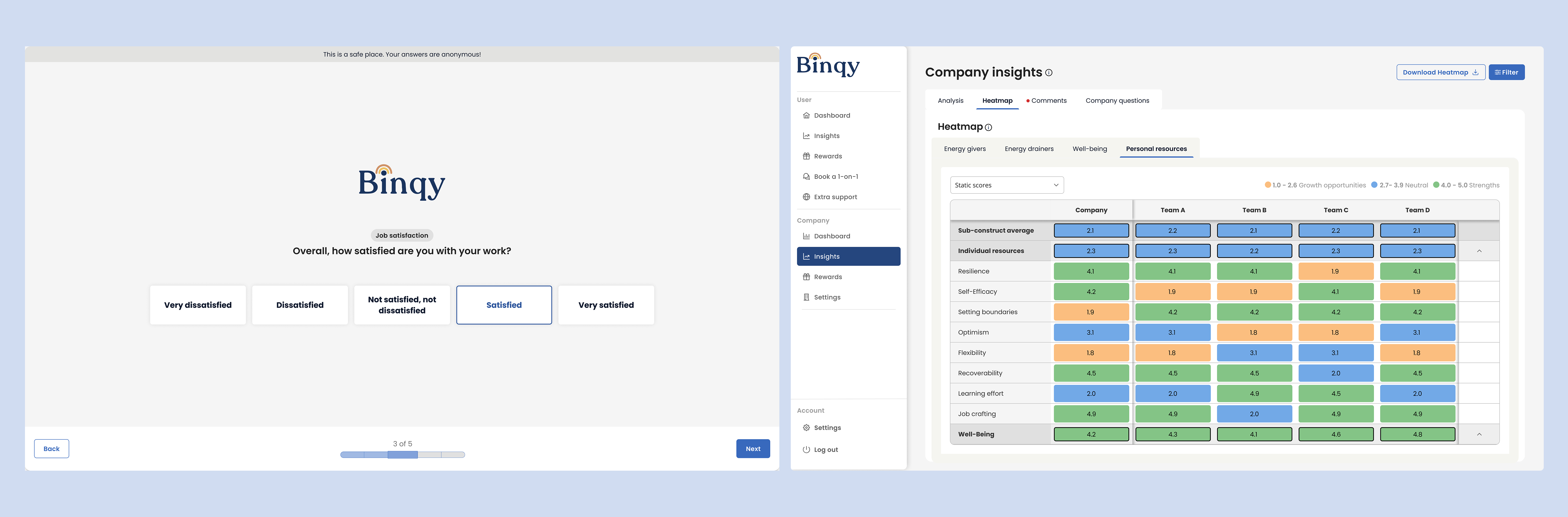
I started by mapping out the user journey for both employees and HR teams, identifying key moments where check-ins and feedback could have the most impact. Using the double diamond method, I conducted ideation sessions, tested flows, and created low- to high-fidelity prototypes. The design focused on simplicity, emotional safety, and engagement by incorporating elements like visual health meters, and optional data toggles to encourage reflection without overwhelming the user.
What I found
- Users appreciated honest, supportive feedback, especially when it felt personal and actionable
- Engagement increased when the interface was friendly, visual, and showed a sense of progress
- Users were more likely to return when feedback felt human, not clinical or robotic
- Respect for privacy and autonomy made users more comfortable sharing sensitive information
Result
- Simplified check-in experience that encourages regular engagement
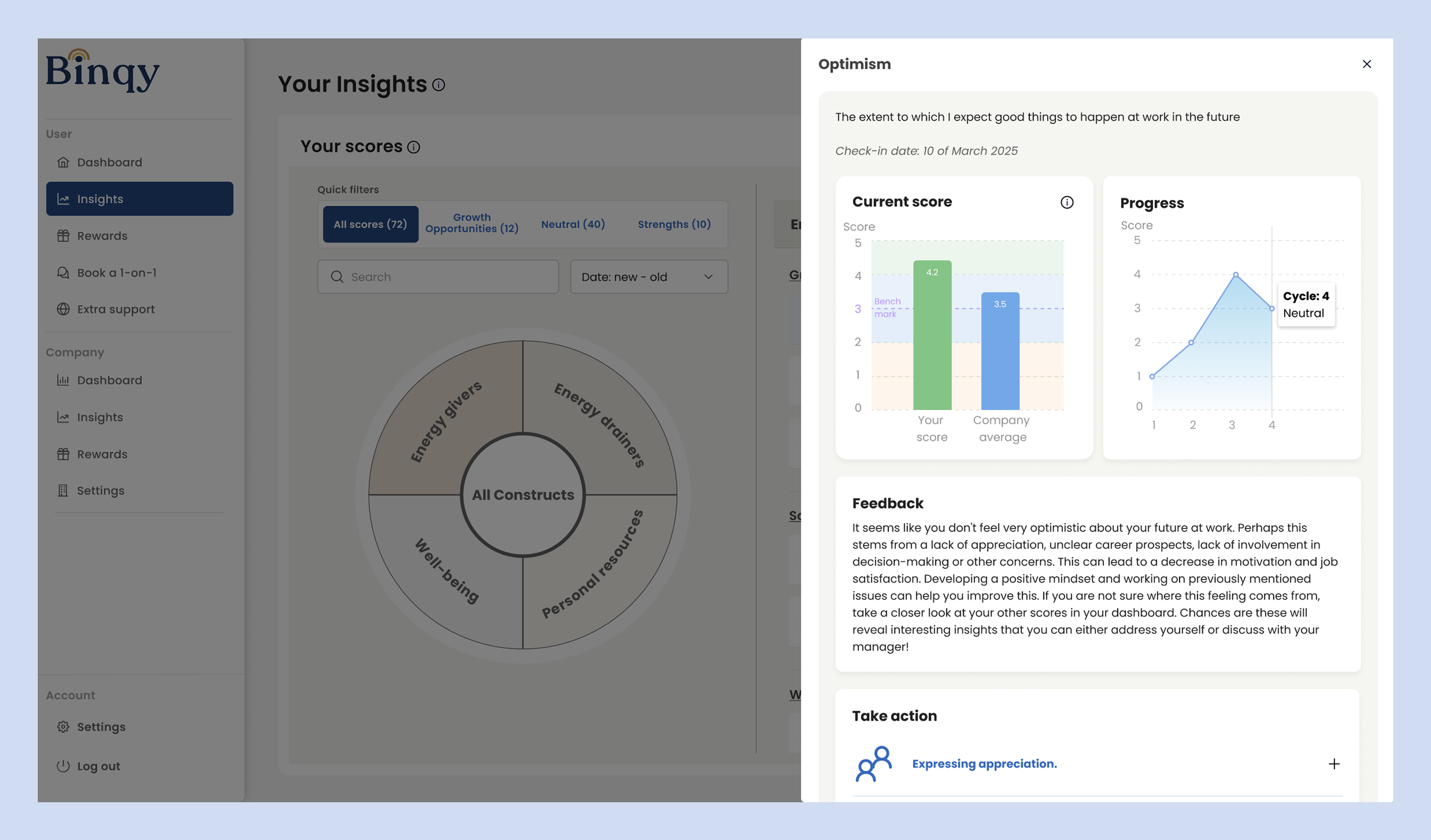
- Summaries by experts and AI-generated summaries that turn complex input into clear, relatable insights
- Actionable next steps delivered through a warm and approachable interface
- Improved visual hierarchy and interaction patterns to reduce cognitive load
- Integrated well-being trends and progress tracking to reinforce long-term engagement
- Early testing showed higher user engagement and willingness to reflect on mental health
- A scalable design system was developed to ensure consistency and speed across future features and updates
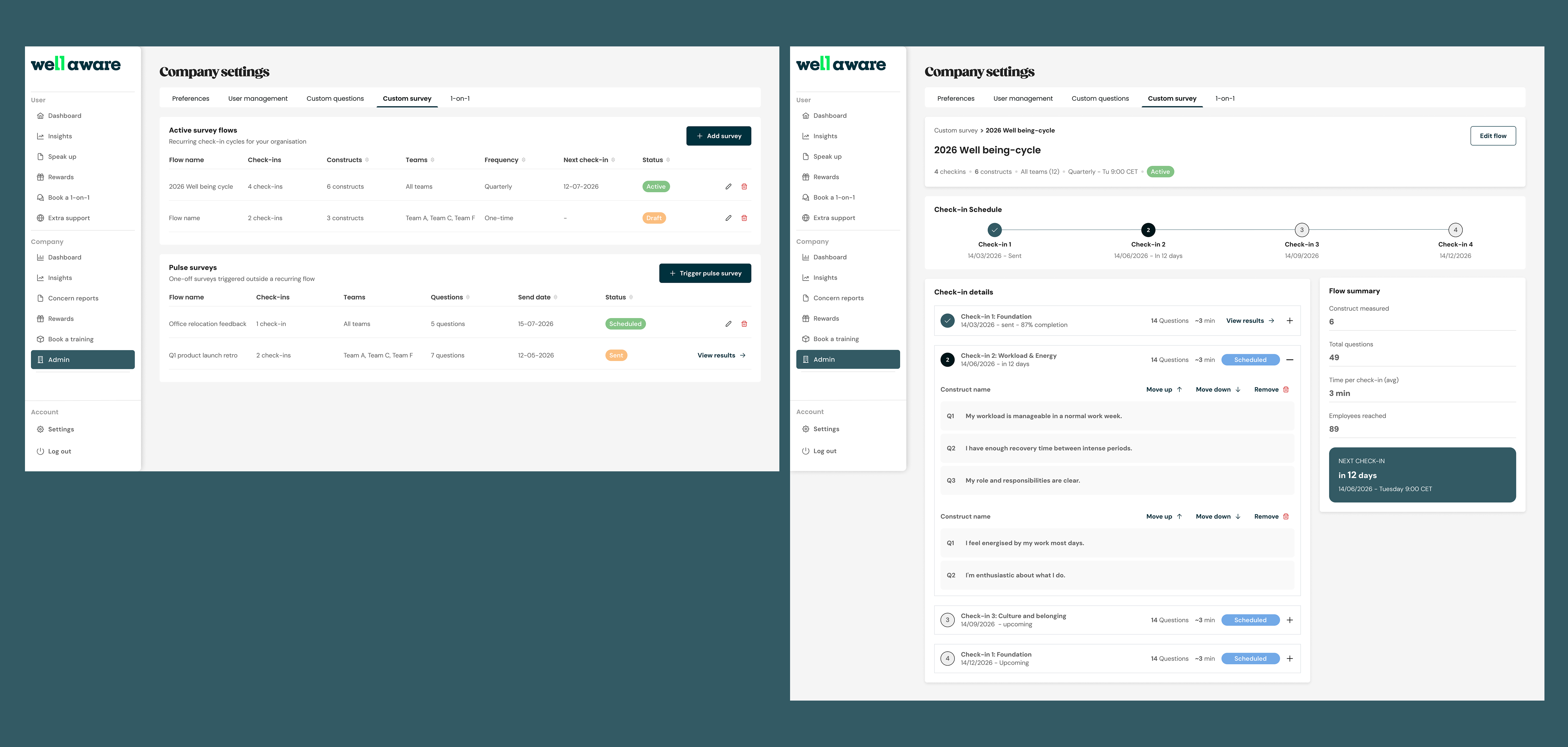
Today, the platform is live and actively supporting numerous companies and employees, helping foster healthier, more resilient workplaces. As Binqy evolves into Well Aware, the platform is entering an exciting new chapter with a refreshed brand identity and an expanding suite of features. From custom surveys and enhanced communication between managers and employees to Speak Up functionality and other powerful wellbeing tools, Well Aware is continuously growing to create safer, more connected, and more supportive workplaces. I'm proud to contribute to a product that is making a real impact and excited about what lies ahead.